|
5 w' x2 Z X& b1 b# s
原标题:可降解塑料在海水中“力不从心”,缓解海洋塑料污染如何另辟蹊径? ; [/ a0 P( u# D1 ~' a0 j7 ^
随着海洋塑料污染形势日益严峻,海洋生态系统面临严重威胁。世界每年生产4.3亿吨塑料[1],其中约有1100万吨进入海洋,到2040年,进入海洋的塑料流量预计将增加近三倍[2]。目前,全球海洋中有约0.75~1.99亿吨塑料垃圾,占海洋垃圾总重量的85%[3]。海洋塑料垃圾主要通过定殖、缠绕、围困和摄食等方式危及海洋生物的生命过程[4]。已知有800多种物种受到海洋塑料污染的影响,包括所有海龟物种[5]、超过40%的鲸类物种和44%的海洋鸟类物种[6]。此外,海洋塑料还会带来外来物种[7]和致病生物[3]入侵等新问题,甚至可以通过阻止气体交换和减少沉积物中无机营养物质的通量来影响关键的生态系统过程,降低初级生产力,从而改变生态系统的功能[8][9]。
/ }0 d3 @( {7 B2 C \& C1 L# { 因此,海洋塑料污染治理迫在眉睫,一时间,可降解塑料成为缓解塑料污染治理压力的重要途径之一。目前,主流的可降解塑料产品包括聚乳酸、聚丁二酸丁二醇酯等,能够在自然环境或特定条件下,在微生物的作用下完全降解成为二氧化碳和水,不增加环境负荷[10]。 i$ N4 Y9 \5 \/ K1 V6 q# Q
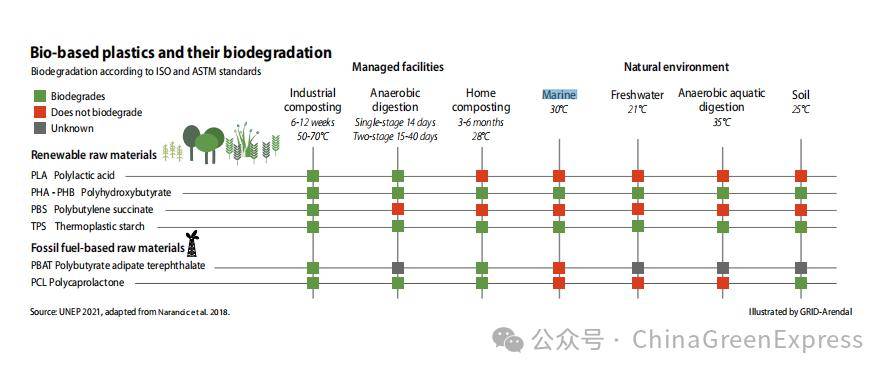
然而,可降解塑料真的可以缓解海洋塑料污染吗?有实验发现,即使在三年后,大多数可生物降解塑料在海洋环境中没有出现任何降解的迹象,或者符合国际标准化组织(ISO)和美国材料与试验协会(ASTM)对于生物降解的标准[11] ~[15]。有研究人员分析认为海洋中微生物量非常少,且海水温度低,生物可降解塑料赖以降解的条件不存在。也就是说,除非满足特定和适当的生物降解条件,否则可生物降解塑料可能破碎成与传统塑料相同的微塑料颗粒[12] [15]。另外,大多数生物基塑料也含有有毒化学物质,构成风险与传统塑料类似,即作为污染物和致病生物的载体,含纤维素和淀粉的产品含有更多的化学特性并诱导更强的毒性[16]。由此可见,生物可降解塑料并不是完美的传统塑料替代品,无法从源头上解决海洋塑料污染问题。 0 [& ~; Q7 |! T
, ?' H o9 u2 |, w
(来源:From pollution to solution: A global assessment of marine litter and plastic pollution.) 9 e; o6 G/ x+ i
为此,中国生物多样性保护与绿色发展基金会(简称“中国绿发会”“绿会”)综合技术部就可降解塑料的生产和使用提几点建议,以期在公众广泛参与下塑料污染能够得到全面改善,海洋生态系统稳步恢复。
: q+ Z8 |6 w, O; K3 W 首先,提高可降解塑料产品信息透明化。在塑料产品上注明成分、化学添加剂以及可降解条件,添加溯源码,以利于加快塑料垃圾处理。 5 _3 v) k; N+ b! W* Q2 Z
其次,加快可降解塑料回收管理。设立专门的可降解塑料回收箱,并根据塑料产品信息进行分类,实现高效回收。
- x' @1 z0 ~& f Z1 P0 H 再次,加强渔业废弃物监管。渔业垃圾是最致命的海洋塑料形式[17],要将销售与回收紧密结合,防止渔业废弃塑料流入海洋。 5 A' [$ C. M' `$ v1 \ R
第四,加大宣传,减少塑料制品的使用。重点限制商超、快递及外卖行业塑料制品的使用,加强企业的回收责任,多向驱动,推动全面减塑和可循环经济。
) j$ ^5 P: [ w5 c% T% X) ] 第五,鼓励植物材料制品消费,特别是替代一次性塑料。激励商超、餐饮、快递和外卖等行业率先完成塑料替代,使用以植物材料制作的购物袋/篮、餐具、包装纸和打包盒等;从环保、安全和时尚角度,引领消费者选择植物材料生活制品,进一步杜绝一次性塑料产品的使用。
( y. E+ o5 n- z5 O$ d 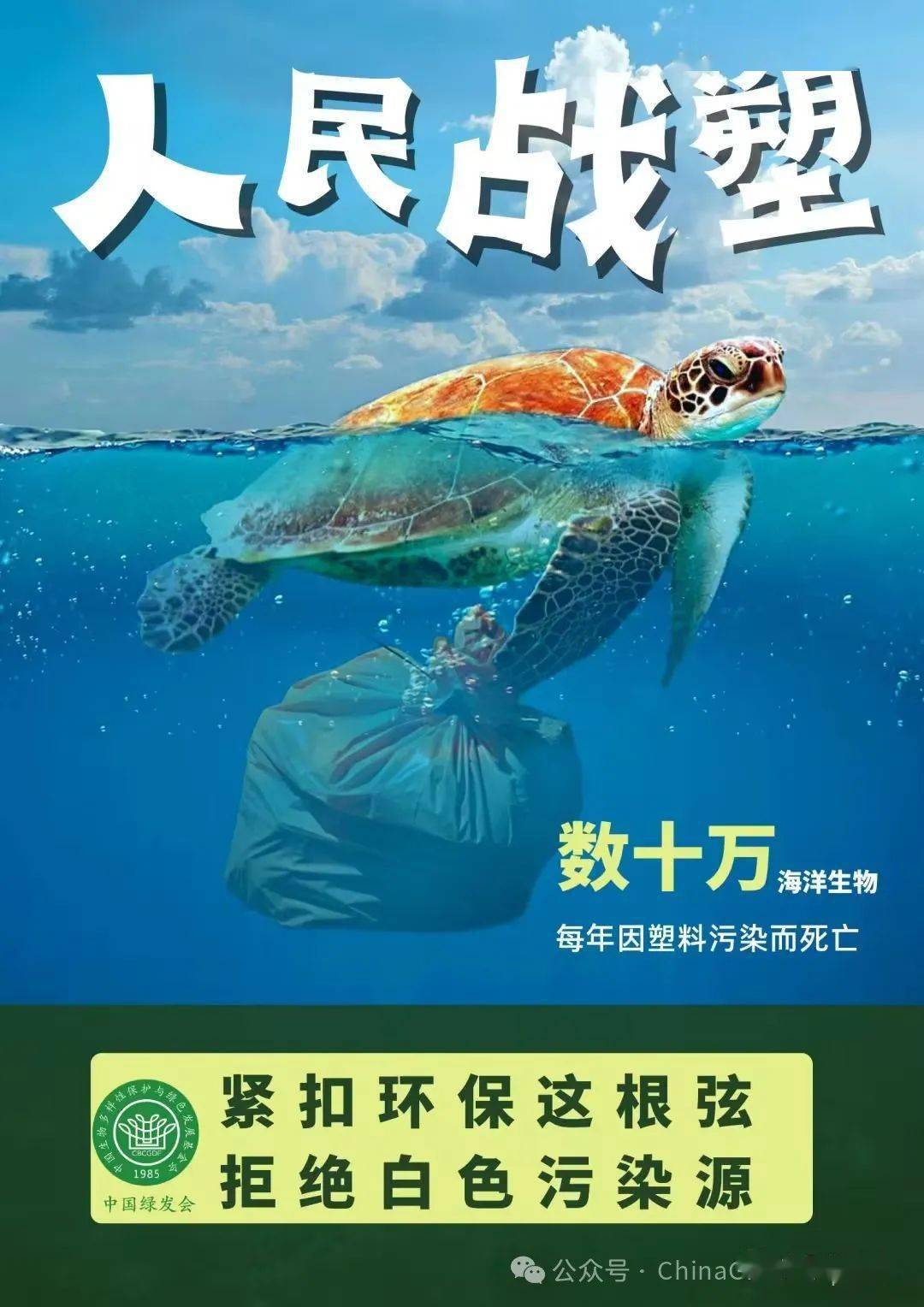
' x$ `; h, W# `# r% U: P4 r* e+ w
最后,呼吁全民参与“人民战塑”,以实际行动助力海洋清洁。如果不采取有效行动,与塑料生产、使用和处置相关的温室气体(GHG)排放将在2040年达到温升1.5℃目标下的全球总排放量的19%[18]。因此,中国绿发会发起“人民战塑”行动,旨在通过全民参与捡拾塑料来提高环保意识,从而进一步减少或杜绝使用塑料制品,崇尚“无塑”生活。目前,已在黄河和长江流域组织开展过几十次活动,取得丰硕成果和广泛的社会影响。 3 ^( O6 }# b. F+ L
文/蓝天 审/赵玉萍 编/angel 8 L9 w6 [2 i6 N; A( L" n
参考文献
. y# m0 E, p9 H. d; O [1]Organization for Economic Cooperation and Development [OECD]. (2020). Gender-specific consumption patterns, behavioural insights, and circular economy.
, t& C+ i. w' }/ z5 d% h https://www.oecd.org/env/GFE-Gender-Issues-Note-Session-5.pdf. * F" l, ^- |- ^. p
[2]The Pew Charitable Trusts and Systemiq. (2020). Breaking the plastic wave: A comprehensive assessment of pathways towards stopping plastic pollution. % L4 p! o9 A5 s0 q" y; ?- i* L
https://www.systemiq.earth/breakingtheplasticwave/. ' b, m# C! K& h- R+ s
[3]United Nations Environment Programme [UNEP]. (2021). From pollution to solution: A global assessment of marine litter and plastic pollution. . Q* X* L9 U4 ?
https://www.unep.org/resources/pollution-solution-global-assessment-marinelitter-and-plastic-pollution.
- V6 g3 x1 p: J0 U6 p3 \ [4]单秀娟,滕广亮,田洪林.(2023).海底大型垃圾对海洋生物的影响及其潜在生态效应.上海海洋大学学报,32(1):163~170.
$ K) q) L; W% H( G; x http://www.aquaticjournal.com/fileSCKX/journal/article/shhydxxb/2023/1/PDF/20221004009.pdf
$ K8 q6 @4 R( Y8 a% x, {3 A. T [5]E.M. Duncan et al.. (2019).Microplastic Ingestion Ubiquitous in Marine Turtles. Global Change Biology, 25(2): 744-52.
! z# I4 c; r- i' U" M0 X http://dx.doi.org/10.1111/gcb.14519.
' I) V" K' F' T) e0 s' O e6 D [6]Secretariat of the Convention on Biological Diversity.(2016).Marine Debris: understanding, Preventing and Mitigating the Significant Adverse Impacts on Marine and Coastal Biodiversity.
9 D; q. y2 d2 `- j0 I7 {& C6 l. F https://www.cbd.int/doc/publications/cbd-ts-83-en.pdf.
n# y, |/ Z/ y- ]6 J/ { [7]强丽媛,朱晓桐,程金平.(2023).微塑料在河口海岸环境的检测、分布、归趋以及生物和环境效应.《环境化学》,(3):832-842. 7 | A+ B3 M, X. R$ E
http://hjhx.rcees.ac.cn/article/id/63e458dcc59bc323c975ccbe % m$ [9 v; Z8 U+ ~ P4 A; u
[8]Green, D.S., Boots, B., Blockley, D.J., Rocha, C. and Thompson, R. (2015). Impacts of discarded plastic bags on marine assemblages and ecosystem functioning. Environmental Science and Technology, 49(9):5380-5389. ( _" x9 a; ~ M5 q
https://doi.org/10.1021/acs.est.5b00277.
$ V. u* ~- f( h# s; l [9]Green, D.S., Boots, B., O’Connor, N.E. and Thompson, R. (2017). Microplastics affect the ecological functioning of an important biogenic habitat. Environmental Science and Technology, 51(1) :68-77. ! _ F0 b9 U) b" ^9 D
https://doi.org/10.1021/acs.est.6b04496. " o, z f3 i! k* W8 F I* t
[10]张宏博,刘焦萍,赵苏杭,等.生物可降解塑料发展现状及展望.现代化工, 2023,43(4):9-12,17.
1 c2 e2 e* J- a( k& l& E* y4 ^" j https://x.sci-hub.org.cn/target?link=https://www.xdhg.com.cn/CN/article/downloadArticleFile.do?attachType=PDFbuh-icsid=12669 & j" Y% O J* V, D
[11]O’Brine, T. and Thompson, R.C. (2010). Degradation of plastic carrier bags in the marine environment. Marine Pollution Bulletin 60, 2279-2283.
% x3 b0 u* F. }% L https://doi.org/10.1016/j.marpolbul.2010.08.005.
1 _) R- W2 [5 m: a+ w- x [12]Alvarez-Zeferino, J.C., Beltrán-Villavicencio, M. and Vázquez-Morillas, A. (2015). Degradation of plastics in seawater in laboratory. Open Journal of Polymer Chemistry 5 (4), 55-62.
; b1 v5 E% k9 _6 B1 q http://dx.doi.org/10.4236/ojpchem.2015.54007.
" R9 }- l, _3 ~/ t/ H8 X1 v; q- e [13]Narancic, T., Verstichel, S., Chaganto, S.R., Morales-Gamez, L., Kenny, S.T., De Wilde, B. et al. (2018). Biodegradable plastic blends create new possibilities for end-of-life management of plastics but they are not a panacea for plastic pollution. Environmental Science and Technology 52(18),10441-10452.
$ M( h* Z& a5 i% h: O6 m8 S https://doi.org/10.1021/acs.est.8b02963.
( \1 y( D, P1 u& x, a0 G3 ]( D [14]UNEP (2018). Exploring the Potential for Adopting Alternative Materials to Reduce Marine Plastic Litter. Nairobi.
5 V8 p6 A8 s) r7 u3 F https://stg-wedocs.unep.org/bitstream/handle/20.500.11822/21134/waste_mgt_asean_summary.pdf. ; u$ ]+ z7 @7 d' l1 H# z
[15]Napper, I.E. and Thompson, R.C. (2019). Environmental deterioration of biodegradable, oxo biodegradable, compostable, and conventional plastics carrier bags in the sea, soil, and open-air over a 3-year period. Environmental Science and Technology 53(9), 775-4783.
- \( A/ C4 o3 X, d# ?0 [ https://doi.org/10.1021/acs.est.8b06984.
% D2 k' y3 J9 b+ l# g! I [16]Zimmermann, L., Dombrowski, A., Völker, C. and Wagner, M. (2020). Are bioplastics and plant-based materials safer than conventional plastics? In vitro toxicity and chemical composition. Environment International145, 106066. ; x" N5 I8 B2 X/ p( H
https://doi.org/10.1016/j.envint.2020.106066. 4 Q- x8 i$ ?3 D( J! Z& f/ Q( O
[17]World Wide Fund for Nature [WWF]. (2020). Stop Ghost Gear. The Most Deadly Form of Marine Plastic Debris. 3 p$ |2 C% u' x: _5 L7 x. h
https://files.worldwildlife.org/wwfcmsprod/files/Publication/file/3c1g4qur2t_ADVOCACY_REPORT_singles.pdf?_ga=2.216641302.1449930867.1665414123-384548275.1665414122. - N% I8 x& }/ J T8 _
[18]The Pew Charitable Trusts and Systemiq. (2020). Breaking the plastic wave: A omprehensive assessment of pathways towards stopping plastic pollution.
+ ^$ W) E% i3 o" A+ G( [ https://www.systemiq.earth/breakingtheplasticwave/. 7 O% i- \* \* `
长按识别,加入中国绿发会【月捐人计划】
# A7 q, h4 |& P 成为为地球、所有物种发声的【绿色大使】返回搜狐,查看更多
. N* P! ?5 S& z0 {1 n( p# I5 n* O) A$ F3 i) c! Y+ G" j' w8 y0 E
责任编辑:
3 o8 s. T- ~) [. ]( W8 @6 e& N2 e' m3 n
. o4 ^2 o5 ~/ b7 w1 Y- m, k9 Y& S
|